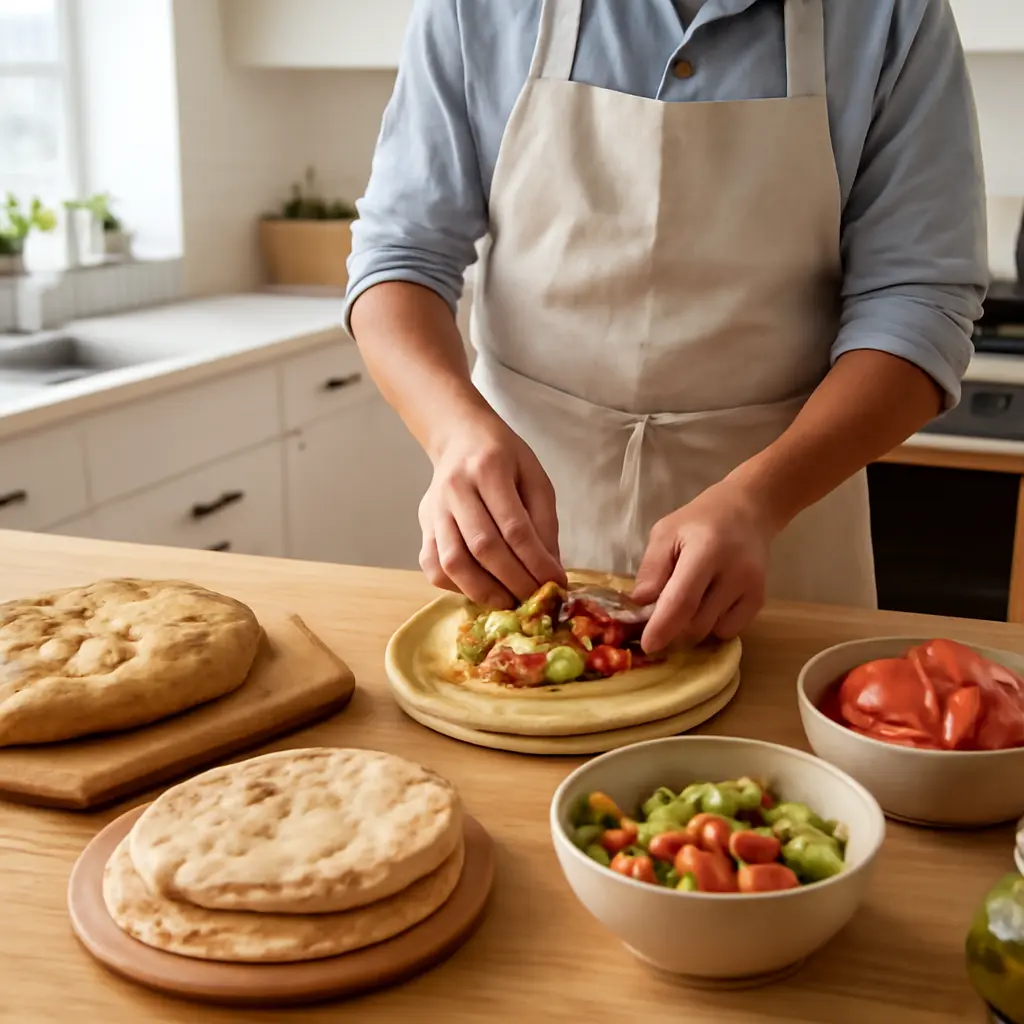
Mediterranean bread traditions turn everyday loaves and flatbreads into flexible, shareable meals—making them a practical alternative to the standard sandwich. From Greek pita and Turkish lavash to Italian focaccia and North African khobz, these breads pair naturally with vegetables, legumes, olive oil, cheese, and grilled foods. The Mediterranean diet is not a single menu, but a pattern centered on plant foods and healthy fats; the World Health Organization recommends at least 400 grams of fruits and vegetables daily, while Mediterranean-style bread meals offer an easy way to build those foods into lunch. This guide looks at what Mediterranean bread traditions are, how their best-known forms differ, and how to use them for satisfying, adaptable meals.
Mediterranean Bread Traditions Define Bread as a Meal Foundation
“Mediterranean bread traditions” is a broad description, not one formal culinary category: it refers to the regional breads and customs of eating them around the Mediterranean basin. The International Maize and Wheat Improvement Center (CIMMYT) describes bread as a staple food with forms shaped by local grains, techniques, and culture. In Mediterranean meals, bread may accompany a dish, wrap a filling, serve as a base, or help scoop sauces and dips.
The shared idea is more useful than the idea of a single authentic recipe. Wheat is common, but recipes, shapes, fermentation, and baking methods vary considerably. A traditional loaf can be made with refined or whole-grain flour, and its nutritional value depends on the ingredients and portion—not simply on its Mediterranean origin. The Harvard T.H. Chan School of Public Health’s Healthy Eating Plate emphasizes whole grains, vegetables, and healthy protein sources, a useful framework for composing a balanced bread-based lunch.
Pita and Other Pocket Breads
Pita is a round flatbread that can form a pocket when steam separates its inner layers during baking. The pocket makes it easy to fill with chopped vegetables, beans, falafel, eggs, or grilled chicken. Not every pita puffs reliably, and some regional flatbreads are served whole rather than split; a pocket is one style, not a requirement for Mediterranean eating.
Focaccia and Oil-Rich Flatbreads
Focaccia is an Italian, yeasted bread commonly baked in a shallow pan, often with olive oil and toppings such as herbs, onions, or tomatoes. Its soft, airy crumb makes it suited to sharing or building an open-faced lunch. Since oil-rich breads can be energy-dense, pairing a modest portion with vegetables and a protein-rich food creates a more complete meal than relying on bread alone.
Lavash, Khobz, and Regional Flatbreads
Lavash is a thin, flexible flatbread found in several West Asian and neighboring food traditions; khobz is a name used for a range of North African breads. Their textures and recipes differ across communities, but both can serve as scoops, wraps, or accompaniments. UNESCO inscribed the tradition of lavash preparation, meaning, and appearance in Armenian culture on its Intangible Cultural Heritage list in 2014, illustrating how bread can carry social and cultural significance beyond its ingredients.
Mediterranean Bread Traditions Replace Sandwiches with Flexible Meal Formats
Once the breads are understood as different tools rather than interchangeable loaves, they suggest several alternatives to a conventional sliced-bread sandwich. A pita can be stuffed, focaccia can become an open-faced base, and lavash can be rolled around a filling. These formats keep lunch convenient while making room for the vegetables, beans, herbs, and olive-oil-based flavors associated with Mediterranean-style eating.
Stuffed Pita for Portable Lunches
A stuffed pita is a pocket bread filled just before eating. Try hummus, cucumber, tomato, leafy greens, and chickpeas, or add grilled fish or chicken. Keep wet ingredients such as sauces separate until serving if the meal will be packed in advance. For a whole-grain option, check the ingredient list: color alone does not establish that a bread is whole grain.
Open-Faced Focaccia for Vegetable-Forward Meals
An open-faced focaccia meal uses a slice as a base rather than enclosing the toppings between two pieces of bread. Add roasted vegetables, white beans, a little cheese, or sardines, then finish with herbs or lemon. This approach makes the toppings visible and easy to vary, but focaccia’s oil content differs by recipe, so serving size and the rest of the meal still matter.
Lavash and Flatbread Wraps
A flatbread wrap encloses a filling in a thin sheet of bread. Spread it with bean purée or yogurt, add crisp vegetables and a protein such as lentils, eggs, or grilled meat, then roll firmly. Unlike a pita pocket, lavash does not need to puff; its flexibility is the feature. Cut the wrap into portions for sharing or keep it whole for a portable lunch.
Bread as a Scoop, Side, or Salad Component
Mediterranean bread can also replace utensils or become part of a composed dish. Use small pieces to scoop hummus, baba ghanoush, or bean dips; serve a piece alongside soup; or combine toasted bread with tomatoes, vegetables, and herbs in a panzanella-style salad. The key is to treat bread as one part of the meal and add produce and protein rather than making the loaf the whole lunch.
Mediterranean Bread Traditions Support a Balanced, Practical Plate
The Mediterranean diet is best understood as an overall eating pattern, not as a promise that any particular bread is automatically healthy. The World Health Organization advises adults to consume at least 400 grams of fruits and vegetables per day and at least 25 grams of naturally occurring dietary fiber daily. Those targets do not prescribe a specific bread, but they reinforce the value of filling a bread-based lunch with vegetables, fruit, pulses, and whole grains.
Choose Bread by Ingredients and Use
Whole-grain bread contains the grain’s bran, germ, and endosperm, although the exact proportion varies by product and local labeling rules. The U.S. Food and Drug Administration explains that whole grains retain these three parts, while refined grains lose the bran and germ during processing. Compare ingredient lists and nutrition labels where available, especially if seeking more fiber or managing sodium.
Build Lunch Around Vegetables and Protein
A satisfying bread meal combines a bread portion with vegetables and a source of protein, such as chickpeas, lentils, beans, eggs, fish, yogurt, or poultry. Olive oil, nuts, seeds, and avocado can add unsaturated fats. Harvard’s Healthy Eating Plate recommends making vegetables and fruits about half of the plate and prioritizing whole grains and healthy protein for the remaining portions; it is a general visual guide, not a rigid rule for every cuisine or individual.
Use Preparation and Storage to Make the Routine Easier
A simple weekly routine can make these breads convenient without requiring daily baking. Portion and freeze bread that will not be used promptly, thaw only what is needed, and store fillings separately to preserve texture. For food safety, the U.S. Department of Agriculture advises refrigerating perishable foods within two hours—or within one hour when the temperature is above 90°F (32°C). Pack chilled fillings with an insulated lunch bag and ice source when they cannot be refrigerated.
Mediterranean Bread Traditions Bring Culture and Variety to the Table
Bread traditions are also social traditions: shaping, baking, serving, and sharing a loaf can connect meals to place and family practice. UNESCO’s recognition of Armenian lavash heritage is one documented example of this cultural role. A contemporary lunch routine need not reproduce a traditional meal exactly; it can acknowledge the bread’s origins, use regionally inspired ingredients thoughtfully, and avoid treating diverse cuisines as one interchangeable “Mediterranean” style.
A practical way to begin is to rotate formats: pita one day, an open-faced slice another, and a flatbread wrap later in the week. Add seasonal vegetables and a pulse or other protein, and adjust the bread type and portion to personal needs and preferences. Mediterranean bread traditions offer more than a new sandwich filling: they offer several ways to make lunch varied, portable, and centered on foods that can be shared.
Conclusion
Mediterranean bread traditions encompass distinct breads—including pita, focaccia, lavash, and khobz—and distinct ways of serving them. Their meal formats range from stuffed pockets to open-faced plates, wraps, scoops, and salads. Bread itself does not guarantee nutritional balance; choosing suitable ingredients and pairing bread with vegetables, protein, and other nourishing foods makes the routine more complete. Try one new bread format this week, explore its regional context, and use trusted nutrition and food-safety guidance to adapt it to your household.
Sources: World Health Organization, Healthy diet, https://www.who.int/news-room/fact-sheets/detail/healthy-diet; Harvard T.H. Chan School of Public Health, Healthy Eating Plate, https://nutritionsource.hsph.harvard.edu/healthy-eating-plate/; U.S. Food and Drug Administration, Whole Grains, https://www.fda.gov/food/nutrition-education-resources-materials/whole-grains; UNESCO, Lavash, the preparation, meaning and appearance of traditional bread as an expression of culture in Armenia, https://ich.unesco.org/en/RL/lavash-the-preparation-meaning-and-appearance-of-traditional-bread-as-an-expression-of-culture-in-armenia-00985; U.S. Department of Agriculture, Keep Food Safe! Food Safety Basics, https://www.fsis.usda.gov/food-safety/safe-food-handling-and-preparation/food-safety-basics/keep-food-safe-food-safety-basics; International Maize and Wheat Improvement Center, Bread wheat, https://www.cimmyt.org/